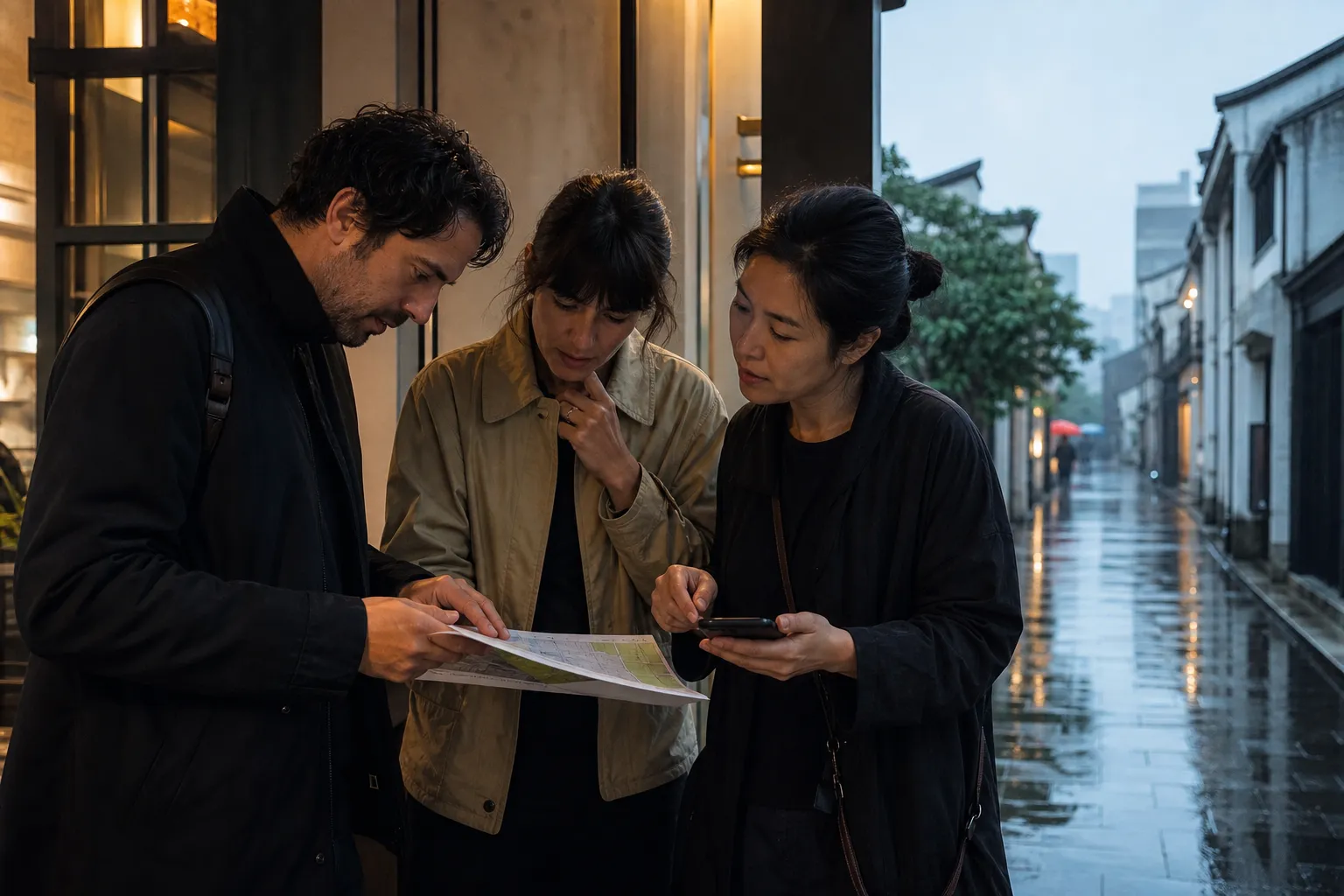
The first question
Sofia and Mateo came from Madrid with a simple brief: help us understand how Shanghai’s older neighborhoods and contemporary design belong to the same city.
When weather rewrote the afternoon
A hard summer rain arrived earlier than forecast. The outdoor sequence gave way to a small design archive, a covered lane-house route and a later riverside walk. The updated route, time and bilingual meeting point appeared together—there was no second version to compare against.
A city explained through decisions
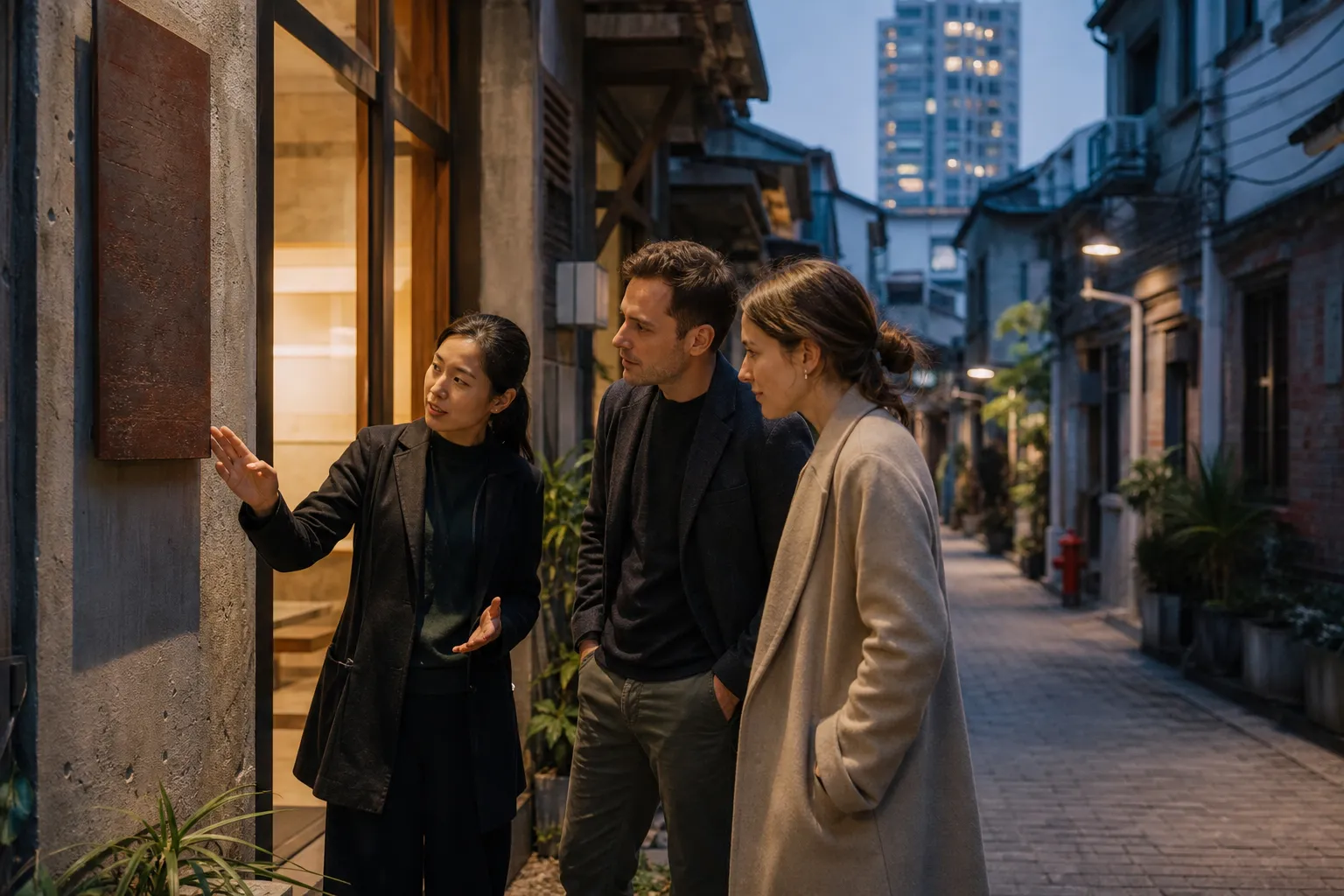
Mei focused on how materials were reused, why certain thresholds survived, and what everyday life asked of a changing block. The city became more legible because every stop answered the same central question.
“Rain changed the afternoon, but it never made the plan feel uncertain. The updated route and meeting point were already clear.”
The value was not that rain disappeared from the day. It was that the latest plan stayed identifiable while the central design question remained intact.