The brief
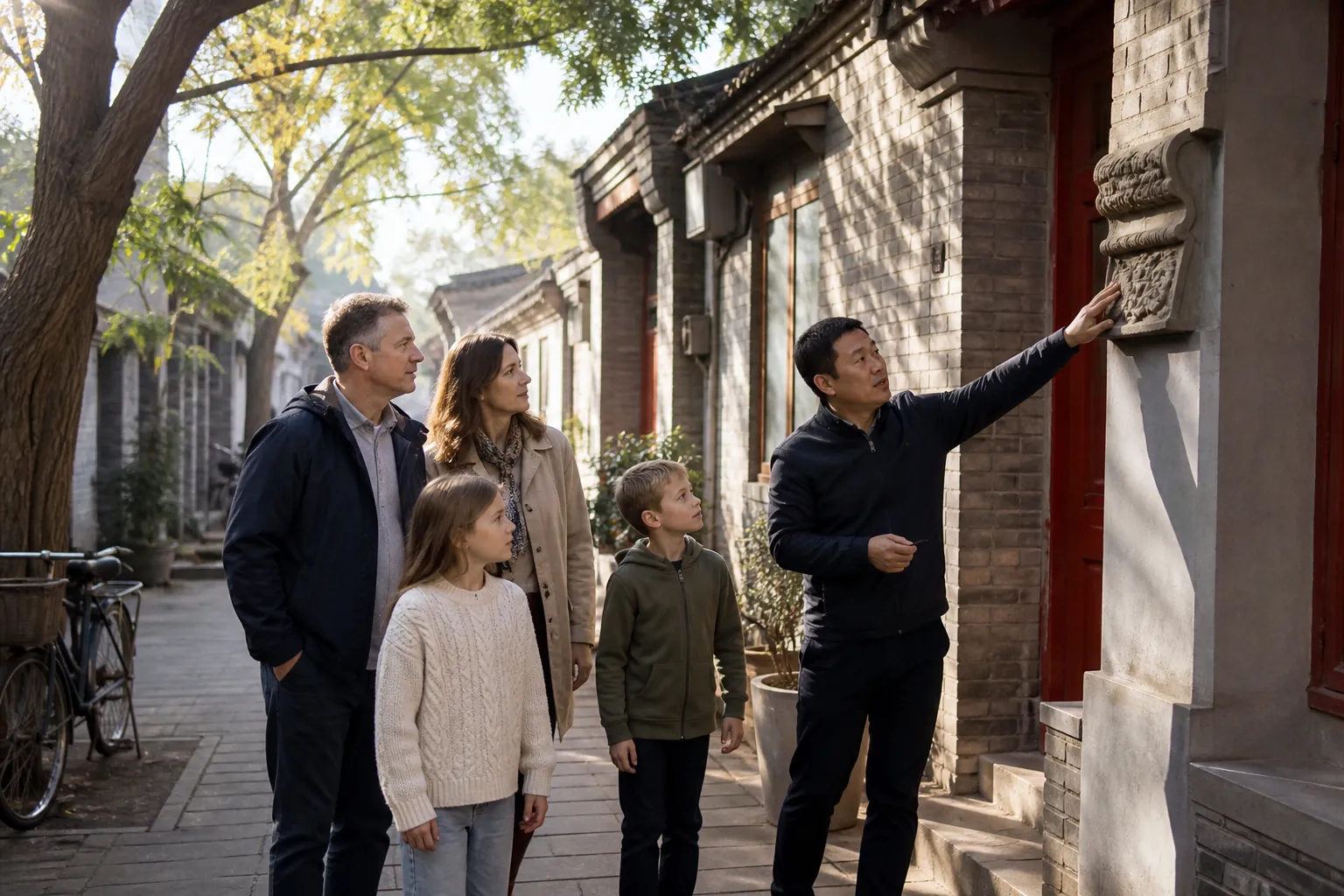
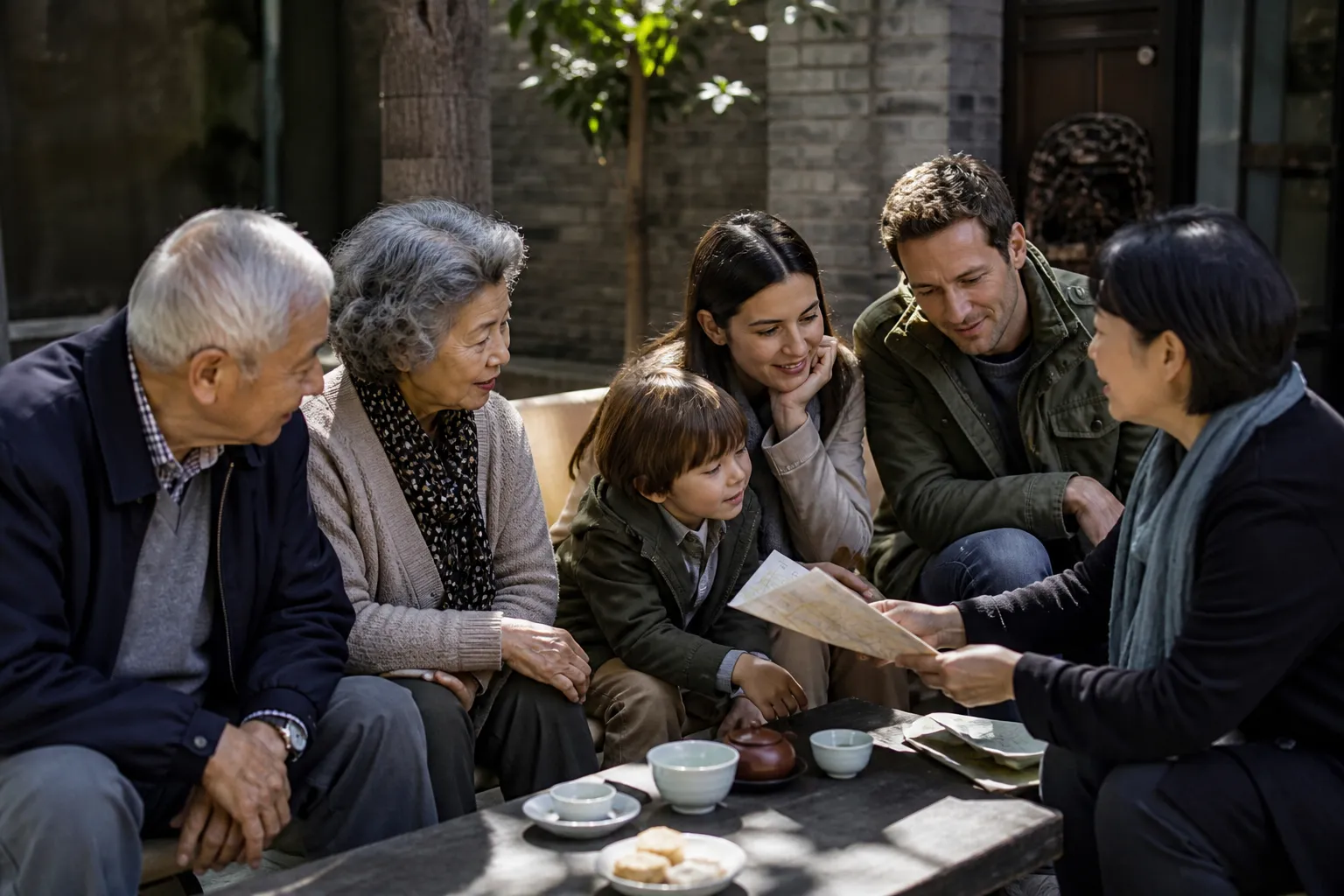
Five travelers, aged eight to seventy-two, wanted their first China journey to feel shared. The grandparents needed a slower walking pace and reliable midday rest. One child had a nut allergy. The family still wanted major history, neighborhood life and time for unplanned questions rather than separate itineraries for different ages.
What changed in the plan
The highest-priority landmark moved to the first morning, before the strongest heat and heaviest family fatigue. Each afternoon had a primary route and a shorter version with a clear decision point. The Beijing hutong service moved to evening, with seated pauses and a tea stop already built into the sequence.
Food communication was prepared once as a bilingual card, then carried into the guide brief and daily plan. It supported a direct conversation with each restaurant rather than replacing ingredient confirmation.
Lin’s contribution
Lin translated the family’s shared history interests into questions that worked at different depths. He could give the grandparents a place to sit without making the pause feel like a disruption, while inviting the youngest traveler to notice rooflines, thresholds and courtyard sounds.
Result
The family completed the priority visits and used the shorter afternoon route twice. The outcome came from choices made for this group and these dates; the same pace, access and timing must be checked again for every new journey.